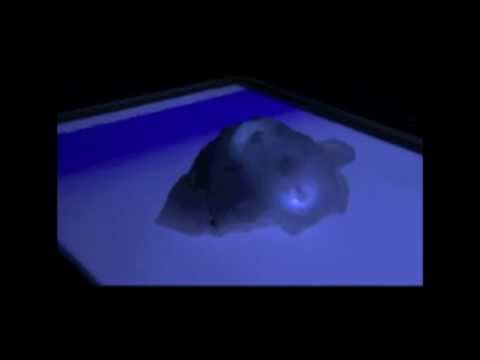
Marine
2024
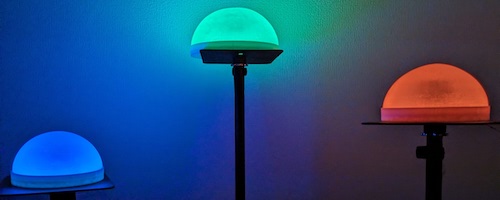
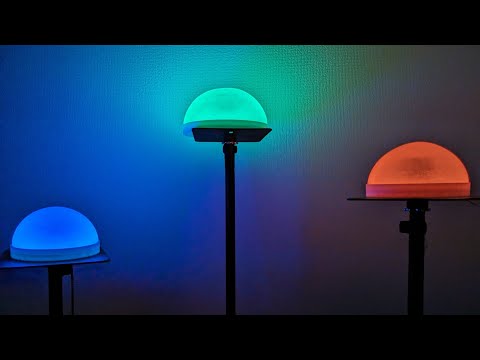
This work is a sound installation consisting of soft dome-shaped acoustic vibration devices.
The domes reproduce sound and vibration expressing an underwater world. By pressing the domes, the soundscape changes interactively, allowing you to perceive the world through both ears and hands. The domes are made of resilient material, expressing marine life in harmony with a soft impression.
The rapid development of digital instruments has given rise to new musical experiences unrestricted by conventional instrument concepts. Unfortunately, however, we have not yet reached a stage where both hearing and deaf individuals can equally enjoy these experiences. Through this work, we ask what inclusive sound media should look like, enabling more people to experience music more richly.
The World of Color Vision Diversity
2023
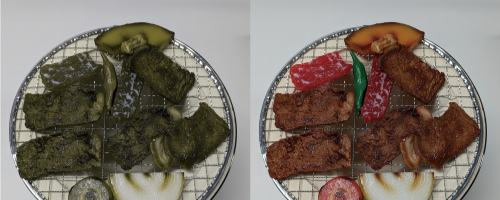
In this work, panels display photographs of grilled meat, chalkboard writing, and door keys as seen by people with color vision deficiency. Turning a rotating stand reveals the actual objects, allowing visitors to see the real colors. Just as it is difficult for people with color vision deficiency to distinguish between raw and cooked meat, chalk colors, or key colors, there are many situations in daily life where color distinction is challenging. This work lets visitors experience those situations firsthand.
Seeing Sound Waveforms
2023
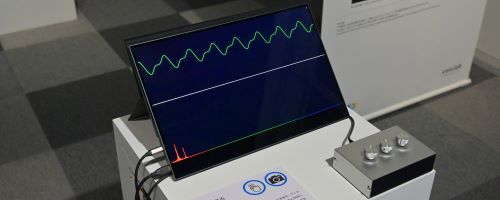
In this work, you can visually grasp the three elements of sound. The knobs in front of the display correspond to (1) loudness, (2) pitch, and (3) timbre from left to right. By turning each knob, you can experience how the sound changes along with its waveform.
Various Textures
2023
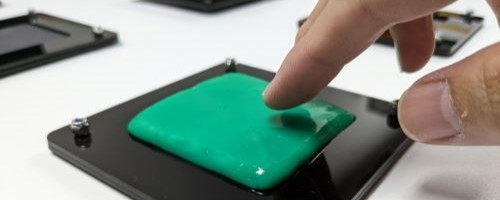
In this work, you can experience the textures of various materials by hand. The names of the materials are intentionally omitted. In Japanese, there are many onomatopoeic words to describe textures, such as "zarazara" (rough), "petapeta" (sticky), and "tsurutsuru" (smooth). By describing what you feel from your fingertips without preconceptions, you can more deeply appreciate the textures that everyday materials possess.
Hearing Colors
2023
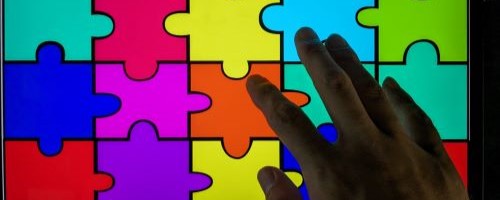
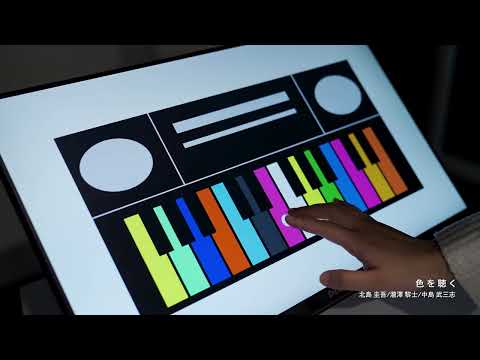
In this work, when you touch the various colors displayed on the screen, sounds corresponding to the touched color are generated. Red corresponds to low-pitched sounds and blue to high-pitched sounds, reflecting the relationship between the wavelengths of light and sound. Additionally, achromatic colors such as gray and black-white correspond to noise with indistinct pitch, and brightness corresponds to volume. Both sighted and visually impaired people can perceive the work through sound.
Touching Colors
2023
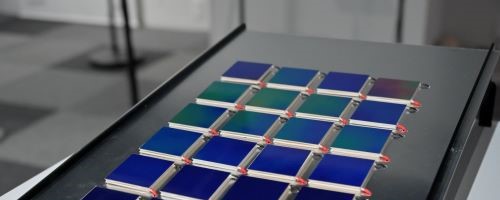
In this work, the colors of tiles change in wave-like patterns, and characters or patterns emerge on the surface. The colors are linked to the surface temperature of the tiles; by gently touching the surface, you can feel the color changes through temperature. The tile temperature is controlled by electric current, and a special sheet on the tile surface changes color from black to blue, green, orange, and purple as the temperature changes.
Suzuakari
2023
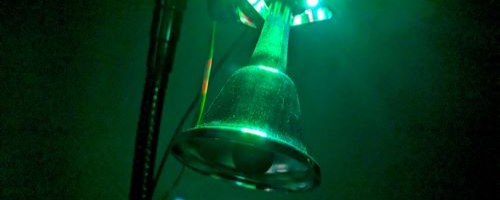
This work plays music in which bell sounds are accompanied by different colored lights, with the tonality (the musical quality determined by scales and pitch arrangements, such as C major or D minor) changing throughout. The Russian composer Scriabin was said to be a synesthete who perceived colors in musical tonalities. Based on literature, this work expresses the synesthetic colors he perceived through light.
The World of Grapheme-Color Synesthesia
2023
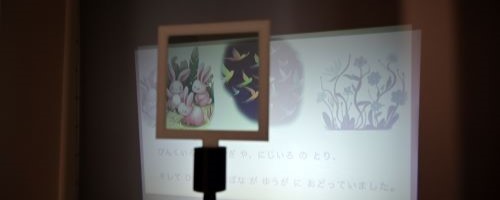
This work is designed to let visitors experience the world of grapheme-color synesthetes, based on the perceptual world described in the literature. Black hiragana characters forming a picture-book-style narrative are projected on a screen. When viewed through a filter placed in front of the screen, colored hiragana appear above the black characters, simulating the synesthetic experience.
Inverse
2022
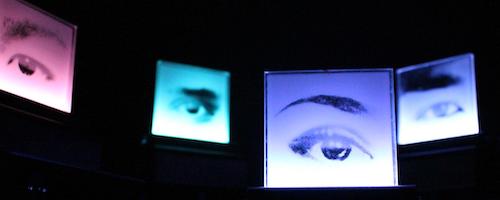
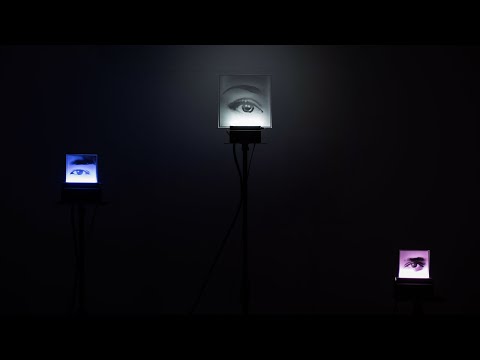
"Inverse" is a sound installation in which fictitious eyes painted on multiple acrylic panels generate sound through their blinking.
Each device in the work expresses blinking by alternately lighting LEDs on two transparent acrylic panels. Eye images are generated by publicly available face-generation AI on the web, and blinking information is extracted from online videos using image recognition algorithms. The blinking data is adjusted so that the overall soundscape remains harmonious, with each device generating its own timbre.
Various rhythms exist in human activity, such as blinking, and these rhythms are known to synchronize when people interact. The way individual rhythms influence each other while maintaining overall harmony is akin to music itself; this work embodies the musicality generated by the human body.
Transmitting Music via LED Light
2022
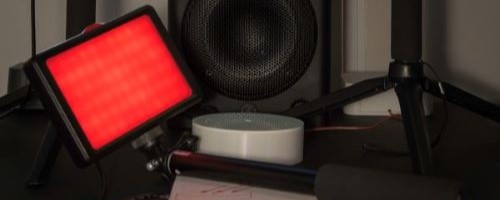
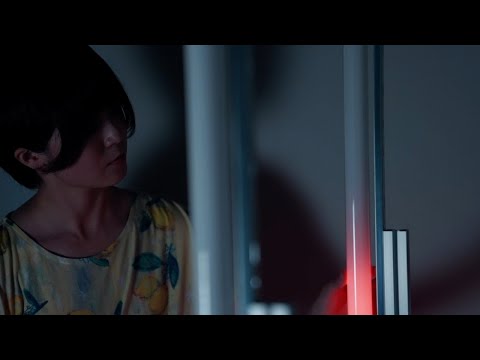
In this work, music information is transmitted through visible light. When you hold an LED light over a white cylindrical device, musical phrases begin to play. The red, blue, and yellow lights each transmit melody, rhythm, and harmony information respectively. When the light hits the central sensor, the information is converted into sound and played back.
The LED lights convert electrical audio signals generated by an internal computer into light intensity variations. The light sensor receives the LED light and converts its intensity back into electrical signal magnitude. The converted audio signals then reach the speaker for playback. In this way, the correspondence between audio electrical signals and light intensity enables the transmission and reception of music information.
How Optical Fiber Transmits Information
2022
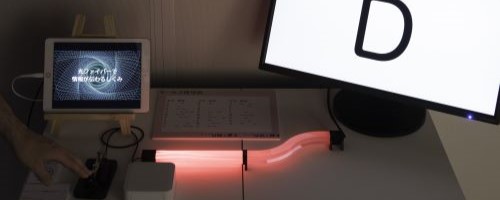
This work provides an accessible introduction to the principles of fiber-optic communication.
By inputting Morse code using a telegraph key (a black button), laser light travels through a transparent plastic material simulating an optical fiber cable, and the received text information is displayed on a monitor. Referring to a Morse code chart, you can transmit many characters by combining short presses ("dit") and long presses ("dah"). Optical fiber cables can transmit various types of information, just like the Morse signals in this work.
HeartBeater
2022
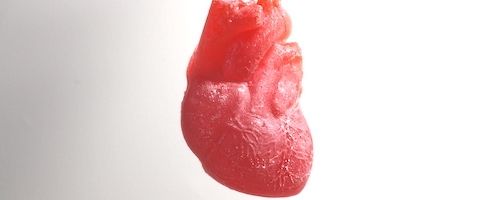
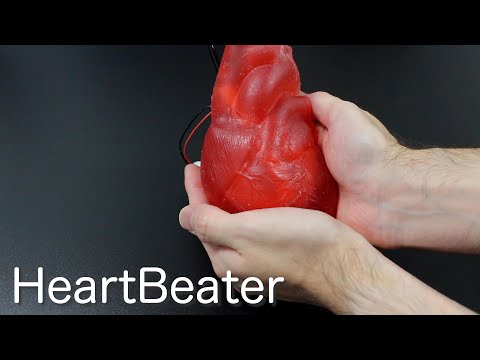
"HeartBeater" is a sound art piece that expresses the presence, vitality, and emotions of others by realistically presenting a heartbeat. Soft urethane resin is used to achieve a realistic appearance and texture, and the piece can be held in your hands to feel the heartbeat.
Instead of directly recording heart sounds, this work measures pulse data. The pulse data is converted into MIDI (Musical Instrument Digital Interface) data, which plays pre-recorded heart sound samples through a built-in vibration speaker. Simultaneously, a built-in mechanism is driven to physically reproduce the beating.
Through this work, we propose a future communication tool that lets you hold and feel the presence and mental state of others. Potential applications include presenting the heartbeats of athletes during professional sports events or actors during theatrical performances.
Cyber Waterfall
2021
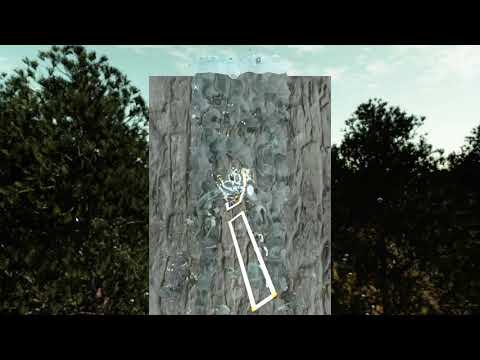
This work is a VR sound art piece that applies pseudo-haptic illusion. A head-mounted display (HMD) presents fluid imagery and sound with varying velocity and particle sizes, allowing the experiencer to move their hands, virtually touch the fluid, and enjoy the sensory differences.
When virtually touching fluid in a VR environment through the HMD, the CG hand's movement is slightly altered from the actual movement, creating an illusion of resistance from the fluid (pseudo-haptic force). When contact sounds of different frequency bands were added while touching the fluid, a greater perceived resistance was observed as the low-frequency band volume increased.
Based on these findings, this work manipulates the CG hand position and the frequency characteristics of contact sounds to reproduce various resistance sensations, aiming to help experiencers focus on their own sensations and create immersion and relaxation effects.
Loudbreather
2019
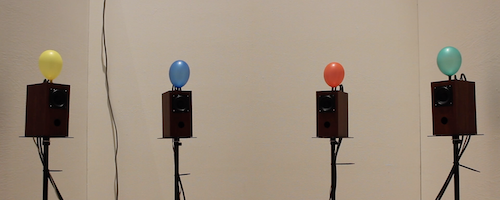
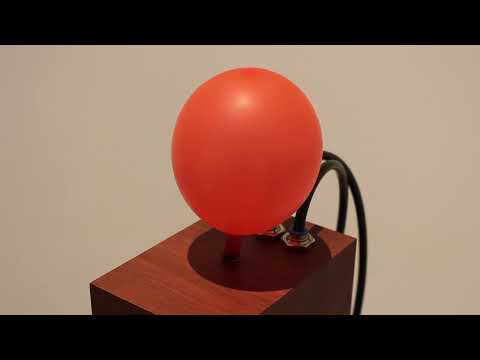
Loudbreather is a sound installation where an a cappella piece plays from four speakers that embody a singer's breathing. Balloons attached to the top of the speakers inflate with each breath intake and deflate as the singer vocalizes. Air flows in and out through holes at the bottom of the speakers, as if the speakers themselves were breathing. The a cappella piece is an original composition designed to highlight the breathing characteristics of each of the four voices, creating the sensation that performers are singing right there.
With the development of music media, we can now listen to music anytime, anywhere. However, current music media have not yet fully expressed the value of music as an embodied activity, including the sense of presence and unity between performers and audience.
This work presents a richer vision of music media by endowing the conventional speaker with the physicality of breathing.
Listening to the Hole of a Donut
2018
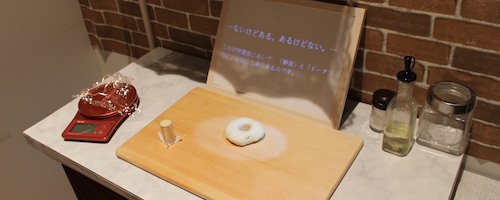
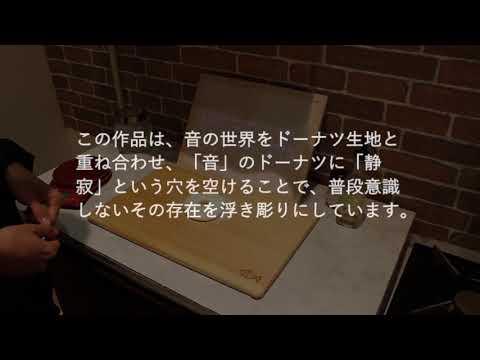
"Listening to the Hole of a Donut" is a sound art piece where punching a hole in donut dough causes the ambient everyday sounds to suddenly fall silent, inviting listeners to turn their ears to "silence."
Our surroundings are filled with various sounds, yet we rarely notice their presence. However, when they suddenly vanish, we become aware of "silence" and realize the sounds that had always been there. This work overlays the world of sound onto donut dough, making the existence of sound tangible by punching a "silence" hole in the "sound" donut.
The late Japanese broadcaster Ei Rokusuke once described a verse from the Heart Sutra, "form is emptiness," as "the hole of a donut" - something that is not there yet is; something that is, yet is not. This work, like that phrase, expresses how uncertain and elusive our ever-changing world truly is.
AQUBE
2017
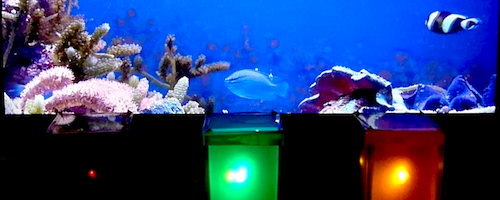
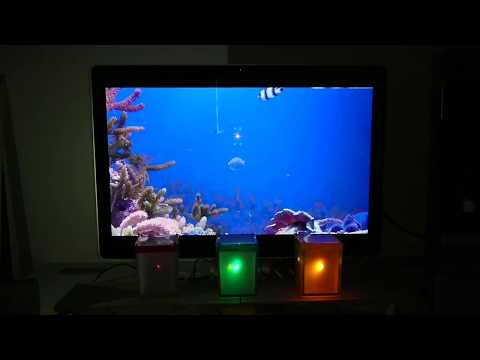
AQUBE is a music generation system driven by the movement of fish swimming in an aquarium.
With the concept of "sharing space and time," the system generates music that can only be heard by people present at that place and time, aiming to enhance the quality and value of viewing experiences at exhibition facilities such as aquariums. Three colored cubes placed in front of the tank each contain different sounds. Users place the cubes wherever they like in front of the tank. When a fish passes over a cube, the sound within is generated. Cubes that have generated sound gradually grow, eventually producing increasingly complex music.
Through the experience of interacting with life and making music together, communication is born between people and fish, and between people.
Karin
2016
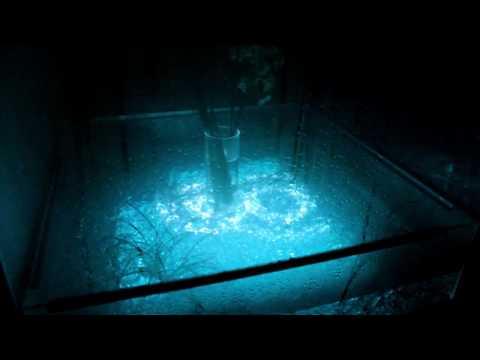
Karin is a biotope work where mist generation and water circulation through condensation allow you to "feel" the actual weather.
Based on weather data obtained from the web, the bottom light and mist generation rate are controlled. Water droplets condensed on the upper acrylic panel drip onto the water surface. This sound is processed and played back as a suikinkutsu (water koto)-like tone, with wave-like light patterns appearing to the rhythm of the dripping water, coloring the plants.
We perceive daily weather through various senses: looking up at the sky, listening to the rain, smelling the wet asphalt. Karin not only provides a small dose of natural healing, but also proposes a future where we can perceive the weather of distant places or the forecast through such natural means.
Ubiquitel
2016
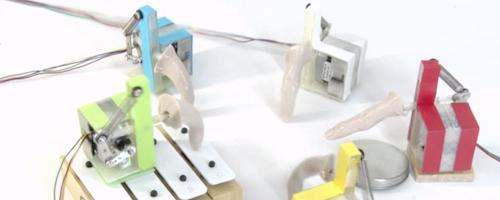
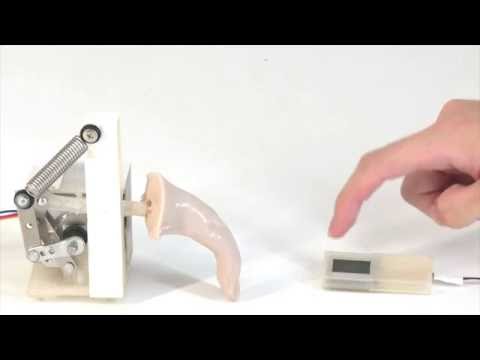
Ubiquitel is a finger-shaped rhythm instrument.
It memorizes rhythm patterns created by your fingertips and repeats them to keep the beat. The timbre changes depending on what material is tapped, and multiple "fingers" can be synchronized to enjoy different grooves. Ubiquitel invites viewers into a trance-like groove, as if living beings were responding to one another.
Cast from real human fingers and infused with human will, Ubiquitel exists at the boundary between life and machine. Simultaneously evoking the inorganic and the presence of a person, this entity that blurs the line between the physical and digital worlds asks: what is the next-generation "space between" where living and non-living beings co-create?
MITAI
2015
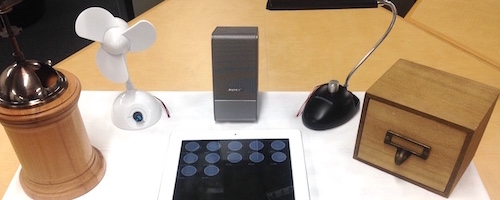
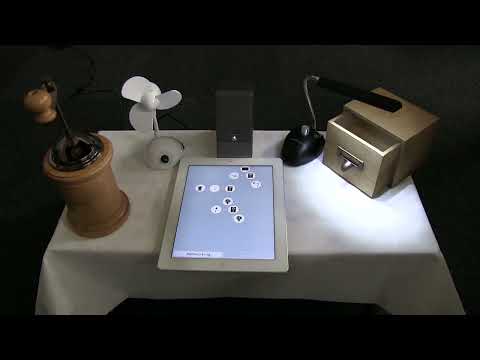
MITAI is a sound art work themed around freely creating new sonic experiences by linking everyday objects with sound.
Familiar objects such as a drawer, light, fan, coffee mill, and speaker are provided along with various sound sources. Using a tablet device, visitors link these objects and sounds together, freely creating their own sonic experiences within the work.
The aim of this work is to add color to our daily lives through free-form creative combinations of everyday objects and sounds.
DropNotes
2013
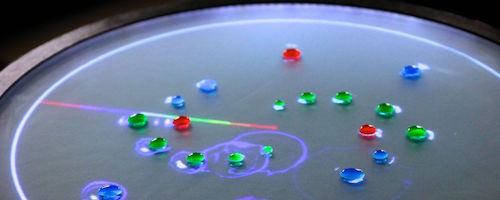
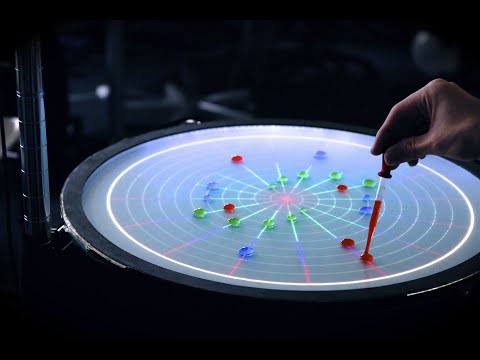
DropNotes is a tabletop tangible interface for music production. After infusing colored water with sound, you draw it up with a pipette and drop it onto a glass table to create music.
The goal of this work is to propose a more intuitive and flexible way to access sound information. Actions such as "putting a funnel in a bottle," "drawing up colored water with a pipette," and "dropping water onto the table" correspond to "recording," "sound source selection," and "editing," respectively.
With the beauty of water droplets and the exciting feel of operating lab-like equipment, DropNotes realizes intuitive music production.
Sound Tiles
2012
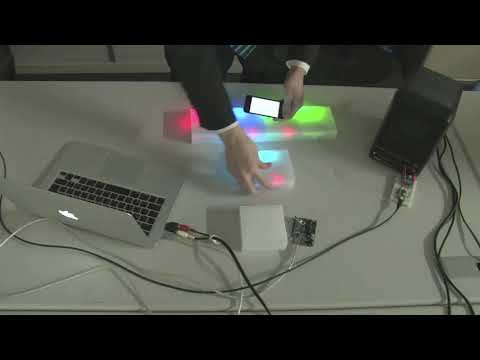
Sound Tiles is an interface for "building" instruments by connecting modules that constitute electronic instruments - performance interfaces, sound sources, effects, and speakers - in a real-time network.
When users connect "tiles" representing electronic instrument components, the modules interconnect, and depending on the combination, various electronic instruments can be created. By representing each module as a tile and dedicating the interface to network construction, the system offers scalability, allowing users to add new modules or reuse existing ones.
Furthermore, through this work, we pursue the possibility of improvisation in electronic instrument creation - rebuilding electronic instruments in real time while performing.
Shelltone
2012
Shelltone is a work themed around active perception of sound information.
When a seashell-shaped sculpture is placed on a table onto which waves are projected, wave sounds are generated in sync with the wave imagery. Through the "peephole" of sound - the shell placed where you wish to listen - you can hear the wave sounds that presumably flow on the other side of the screen.
We perceive the real world in highly active ways: touching things, straining our ears, peering closely. This is entirely natural for us. Shelltone expresses the possibility of new media that allow us to catch information naturally through such active engagement.
Singing Covers
Music
A collection of Vocaloid song covers.
Original Music
Music
A collection of original Vocaloid and other compositions.